
Resources & Insights
No-Nonsense, Just Real Mortgage
Advice from a Broker Who Cares
As a mortgage expert and advocate for smart homeownership, I’m here to provide you with the insights, tools, and guidance you need. Buying a home, investing in real estate, or refinancing your mortgage all come with important decisions, and this resource hub is packed with expert advice, real stories, and market updates to help you move forward with confidence.
I’m here to help you make the best financial decisions for your future.

Helen Gonda
Associate Mortgage Broker
License #3000601

Expert Insights
Get access to up-to-date market trends, mortgage tips, and expert advice tailored to help you make informed financial decisions.

Real Stories & Advice
Learn from real-life experiences, success stories, and case studies that provide actionable takeaways for homebuyers, investors, and homeowners.

Tools & Resources
Take advantage of mortgage calculators, downloadable guides, and exclusive industry events designed to simplify your mortgage journey.
advice for first time home buyers
Read Our Newest Blogs

How Much House Can I Afford? The Truth About Mortgage Pre-Approvals in Canada
How Much House Can I Afford? The Truth About Mortgage Pre-Approvals in Canada
There is a massive difference between what the bank says you can borrow and what you can actually afford. If you do not understand that gap before you start house hunting, you could end up stretched thin — paying a mortgage you technically qualified for but can barely manage month to month.
As a mortgage broker in Halifax, I walk clients through this every day. Here is how pre-approvals really work in Canada, what the numbers actually mean, and how to figure out what you can truly afford.
What a Real Pre-Approval Looks Like
If you filled out a five-minute application on a banking app, you did not get a real pre-approval. Those tools give rough estimates based on limited information. A true pre-approval means sitting down with a mortgage professional, pulling your documents together, and running the real numbers.
Here is what we look at:
Your gross household income. If you and your spouse both work, we add both salaries together before taxes. Any additional income, like Canada Child Benefits, also gets added in. We take your total gross income and break it into monthly amounts.
Your monthly debts. This is where it gets tricky. We do not look at how much you owe in total. We look at your monthly payment obligations. You could have $100,000 in debt with small monthly payments and still qualify. But if you have a $20,000 car loan with $900 a month payments, that eats into your buying power fast.
Your assets. We want to see what you have saved and what your financial picture looks like after the purchase. Most first-time buyers are close to zero in assets after covering the down payment, land transfer tax, and closing costs, and that is normal. But if you carry high-interest debt on top of that, we need to talk about a plan before you buy.
How Debt Is Calculated (It Is Not What You Think)
One of the biggest misconceptions I see is people telling me they have "no debt." Then I look at their file and see deferred payments, student loans not yet in repayment, or credit card balances with minimum payments.
Here is how lenders actually calculate your debt:
Credit cards: We must use 3% of your balance as the monthly payment, even if you are paying less. If you owe $10,000 on a credit card, that counts as $300 per month against your application, regardless of your actual minimum payment.
Student loans: Even if you are not in repayment yet, we calculate the payment at 1.5% of the balance.
Deferred or zero-interest debt: If you have a "buy now, pay later" balance or deferred car payments, those still count. You will eventually pay them, and lenders factor that in.
This is exactly why an online calculator cannot replace a real conversation with a mortgage broker.
The Stress Test and Debt Service Ratios
Every mortgage in Canada goes through the federal stress test. You do not qualify at today's actual interest rate. You must prove you can afford payments at the qualifying rate, which is currently the greater of 5.25% or your contract rate plus 2%.
On top of that, lenders use two key ratios:
Gross Debt Service (GDS) ratio: Your housing costs, including mortgage payments, property taxes, and heating, cannot exceed 39% of your gross monthly income.
Total Debt Service (TDS) ratio: When you add in all other monthly debt payments like car loans, credit cards, and student loans, the total cannot exceed 44% of your gross income.
These are hard limits set by CMHC. If your numbers do not fit within them, you will not get approved, no matter what an online tool told you.
The Hidden Costs That Catch Buyers Off Guard
Here is where the gap between "qualified" and "affordable" really shows up. Your mortgage payment is only part of the picture. Once you own a home, you are also paying for:
Property taxes. As a rough guide, expect about 1% of your purchase price per year. Buy a $500,000 home, and your taxes could be around $5,000 annually. That is over $400 a month.
Heating. On a mortgage application, I might use $100 per month for a house. Your actual heating bill, especially in an older Nova Scotia home, could be significantly more.
Home insurance. First-time buyers with older homes often face higher premiums.
Maintenance and repairs. Older homes may need immediate work. That is real money you need to have available.
If you are currently paying $3,000 a month in rent and think a $3,000 mortgage is the same thing, think again. Rent typically includes many of these costs. A mortgage does not.
A Simple Rule of Thumb
Want a quick estimate? If you have zero debt, take your gross household income and multiply by four. That gives you a rough maximum purchase price.
So a household earning $100,000 per year could look at roughly $400,000, with no debt. Add a car loan or credit card balance into the mix and that number drops fast.
That might feel discouraging, especially with the current market. But here is the thing: buying within your means is how you build real wealth. My husband and I bought our first home as a fixer-upper. Leaky roof, no heating, bought in winter. We fixed it up ourselves, sold it for a profit, and built from there. That is sweat equity, and it works.
Before You Start House Hunting
A few things that will set you up for a stronger pre-approval:
Pay down high-interest debt first because it has the biggest impact on your ratios. Avoid taking on new debt before buying, meaning no new cars, no furniture shopping, and no financed appliances. Save as much as possible for your down payment, and do not forget to budget for closing costs on top of that.
And most importantly, talk to a mortgage broker before you start looking. Not after you have found a house. Not through a five-minute app. A real sit-down conversation where we break down your full financial picture and build a plan that actually works.
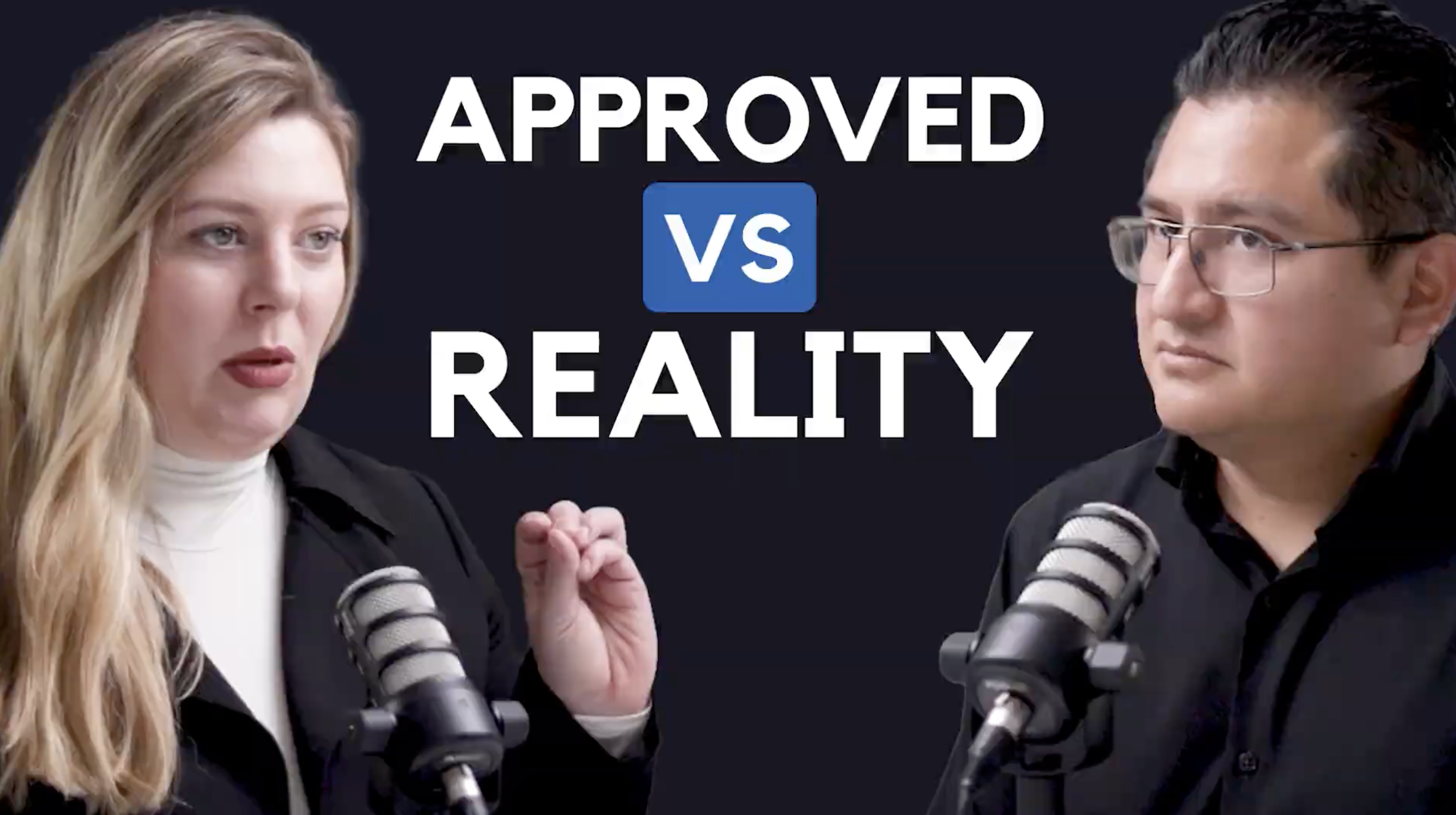
Watch the full conversation on YouTube: How Much House Can I Afford? The TRUTH About Canadian Pre-Approvals

Helen Gonda is a mortgage broker in Halifax, Nova Scotia, helping Canadians navigate the real numbers behind homeownership. Contact Helen at gondamortgages.com to get your personalized pre-approval.

DOWNLOAD FREE GUIDE
New Construction Loan Buyer’s Guide
Your Ultimate Guide to Financing Your Dream Home
Don’t navigate construction financing alone. Our comprehensive guide walks you through.
Understanding construction loan types and how they work
The step-by-step loan process from pre-approval to completion
Budget planning with cost breakdowns
Timeline expectations for your construction project
Choosing between a mortgage broker and bank
Selecting the right builder and avoiding common pitfalls
Download Your Free Guide
Things to ask a mortgage broker
Frequently Asked Questions
What makes Gonda Mortgages different from banks and other mortgage brokers?
Unlike banks with one-size-fits-all programs, we offer customized mortgage solutions based on real experience. Helen combines financial expertise with hands-on construction and real estate investment experience, having flipped five properties herself. We fight persistently for approvals, structure applications creatively, and provide advice based on practical, in-the-field knowledge that comes from actively investing in properties and managing construction projects ourselves - not just reading about it in textbooks.
Do you specialize in particular types of mortgages?
Yes, our primary specialty is construction loans for both individual homeowners and small builders. We also excel in purchase plus improvement mortgages over $40K, investment property financing, newcomer mortgages, and self-employed mortgage solutions. With our connections to multiple specialized lenders, we can often secure approvals that banks would deny.
How much do I need for a down payment on a construction loan?
It depends on your situation. If you already own your land, you may be able to start building with no additional down payment by using your land equity to fund the project. For turn-key construction, expect a down payment of around 5%. We'll explore all options to minimize your upfront costs.
How long does the construction loan process take?
The entire process typically takes 6-12 months: 3-6 months for pre-construction (land acquisition, permits, planning) and 6-12 months for construction itself. Our clients usually receive pre-approval within 24 hours, allowing you to start planning with confidence right away.
What's the difference between a construction loan and a regular mortgage?
A construction loan provides funding in stages (draws) as your build progresses, with interest-only payments on disbursed amounts during construction. Once your home is complete and you receive an occupancy permit, the construction loan converts to a standard mortgage with regular principal and interest payments.
Can I get a construction loan if I'm self-employed?
Absolutely. We work with specialized lenders who understand self-employed individuals and their unique income situations. We'll help structure your application to highlight your financial strengths and ensure lenders see the complete picture of your financial stability.
Do you work with newcomers to Canada who want to secure a mortgage?
Yes, we have specific expertise helping newcomers navigate the Canadian mortgage system. As an immigrant herself, Helen understands the challenges you're facing. We offer bilingual services in English, Russian, and Ukrainian, and work with lenders who have programs designed for new Canadians.
Can you help with renovation mortgages for properties that need significant work?
Definitely. We specialize in Purchase Plus Improvements mortgages with no $40K cap like most lenders impose. Whether you're buying a fixer-upper or wanting to renovate your current home, we can help you access funding that covers both the purchase price and renovation costs in one mortgage.
What information do I need to provide for a mortgage pre-approval?
For an initial consultation, we'll need information about your income, assets, debts, and credit history. For a formal pre-approval, you'll need to provide documentation including identification, proof of income (T4s, NOAs, pay stubs), proof of down payment, and details about the property or construction project. We'll guide you through exactly what's needed.
How do construction loan draws work?
Construction loans typically involve 4 draws (though this can vary based on your project and lender). Each draw represents a stage of home completion—such as foundation, lock-up, drywall completion, and final completion. Funds are released after each stage is inspected and approved. We'll help you understand the draw schedule and plan your cash flow accordingly.
Still Have Questions? Let’s Talk!
If you didn’t find the answer you were looking for, reach out today, I’m here to help with expert advice and personalized solutions!
mortgage calculator halifax
Download My Mortgage
Toolbox
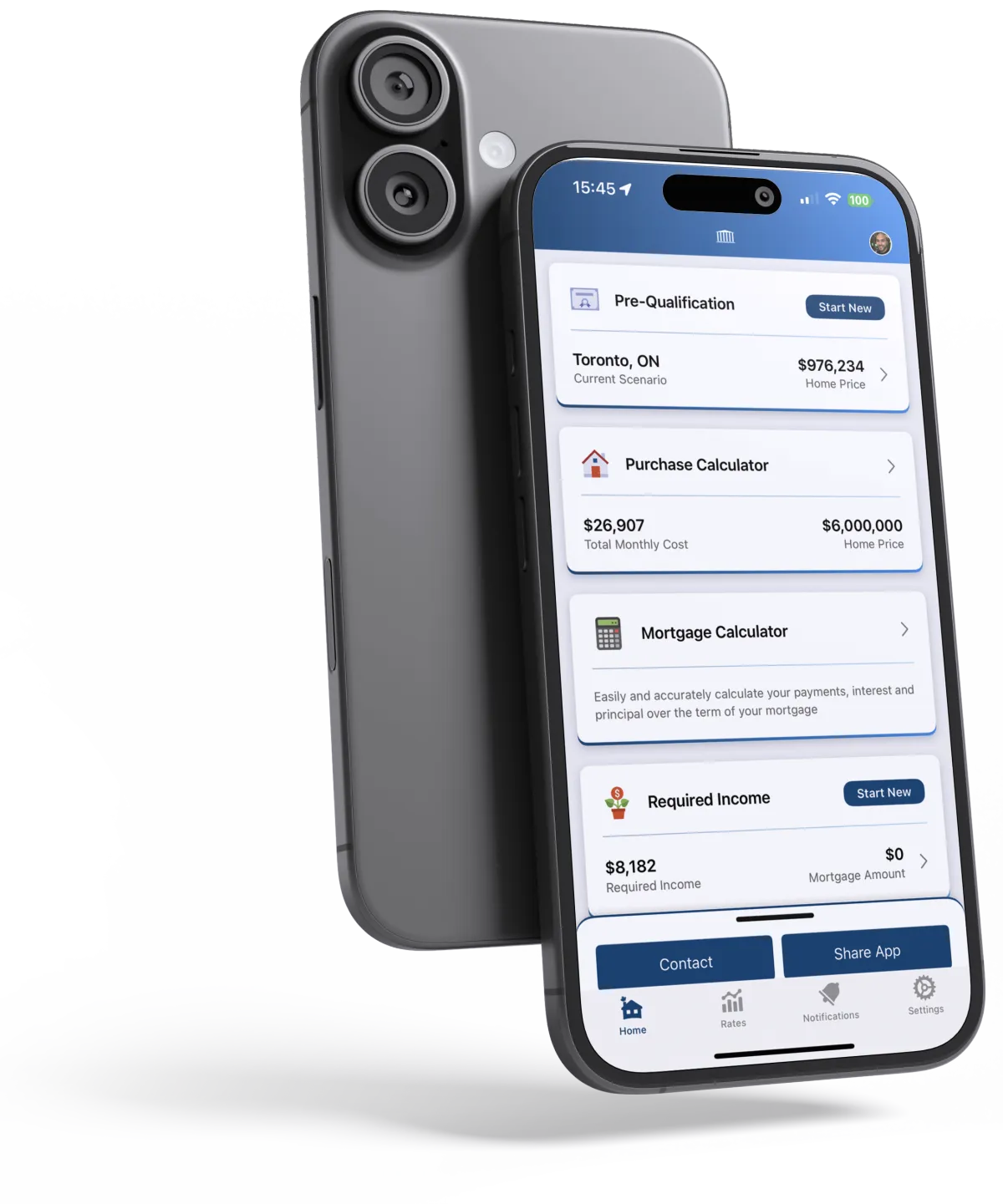
Download our Canadian Mortgage App and get access to all premium tools to help plan your mortgage. It’s designed to help you quickly and easily navigate the complexity of mortgages.

Free Downloads
Homebuyer Resources

Mortgage Pre-Approval Checklist
Everything you need to get pre-approved quickly.
Mortgage Terminology Cheat Sheet
Simple explanations of key mortgage terms.
Hidden Costs of Buying
a Home
A breakdown of closing costs, fees, and expenses.
Free Downloads
Refinancing & Equity
Mortgage Renewal Checklist
Know your options before signing your renewal.
Debt Consolidation Worksheet
See how much you can save by consolidating debt into your mortgage.
Free Downloads
Investor & Commercial Resources
Real Estate Investment Guide
Strategies for building wealth through property.
Commercial Mortgage Basics
What you need to know about financing commercial properties.
Rental Property Cash Flow Calculator
Estimate your rental income and expenses.
Free Downloads
Mortgage Planning Tools
Self-Employed Mortgage Guide
Tips to get approved as a business owner.
Credit Score Improvement Checklist
Steps to boost your score for better rates.
Moving Checklist
Stay organized before, during, and after your move.
Resource Links
Trusted Sources From Other Websites

Interest Rates
Credit Bureaus
Government Housing Agencies
Government Housing Agencies

Helen Gonda, Associate Mortgage Broker with Ideal Mortgage Inc.
License #3000601
Ideal Mortgage Inc. Lic # 3000056
A licensed mortgage brokerage in Nova Scotia
Contact
(902) 414-2872
helen@gondamortgages.com
Halifax , Nova Scotia Canada
Office Location
6080 Young Street,
Halifax Nova Scotia, B3K 5L2
Quick Links
Legal


